

Keep Nigeria’s Children in School: Enough is Enough
When I first began advocating for basic education about eight years ago, my focus was on junior secondary school children. I wanted every child to have access to free, universal education. Together with a few co-travelers, through OpenFees Educational Aid Foundation (OpenFees), we started a scholarship scheme, funding over 100 senior secondary students for school fees and WAEC exams.
One hundred children may seem like a drop in the ocean compared to millions of out-of-school children in Nigeria. But for us, it was a start, a proof that small efforts could change lives. Those students, who would have otherwise dropped out at JSS3, were given a chance at a future. This work continued until the COVID-19 pandemic, when children from low-income homes were locked out of school entirely. Advocacy slowed but never stopped. By 2025, we refocused on the most vulnerable: nursery and primary school children.
Why Primary Schools Matter
The numbers are staggering. According to UNICEF, one in five of the world’s out-of-school children is Nigerian. Primary education is officially free and compulsory, yet 10.5 million children aged 5–14 are not in school. Only 61% of 6–11-year-olds attend primary school regularly, and just 35.6% of children aged 36–59 months receive early childhood education.
The situation is worse in northern Nigeria. Net attendance for girls is only 47–48% in the North-East and North-West. Socio-cultural norms, poverty, and economic barriers continue to keep girls, in particular, out of school. Every day these children remain out of classrooms, the country loses a piece of its future.
The Reality of Federal Funding
Look at the numbers. In the 2026 federal budget, less than 1% of the total budget (₦441.9 billion) is allocated to UBEC, the agency responsible for universal basic education. That is just 12.5% of the education sector allocation (₦441.9bn / ₦3.52trn).
And what does this mean in practice? 97% of that money goes to salaries, leaving a tiny fraction for classrooms, textbooks, and learning materials. After corruption and mismanagement, even that small fraction barely reaches children. With 76 million children aged 5–14, this works out to ₦5,816 per child per year, roughly ₦485 per month, or ₦16 per day.
Even when we include state and local government contributions, the total public spending on basic education rises to about ₦2.4 trillion, translating to ₦31,500 per child per year (~US$35–40). Still, compared to what other African countries spend on basic education, hundreds to thousands of dollars per child per year. Nigeria’s investment is pitifully low. Families shoulder the rest through uniforms, PTA fees, transportation and textbooks.
Children Are Not Pawns
Nigeria’s 6-3-3-4 system puts children aged 3–14 in the most vulnerable category:
- Nursery/Pre-primary: 3–5 years
- Primary School (Basic 1–6): 6–11 years
- Junior Secondary (JSS1–3): 12–14 years
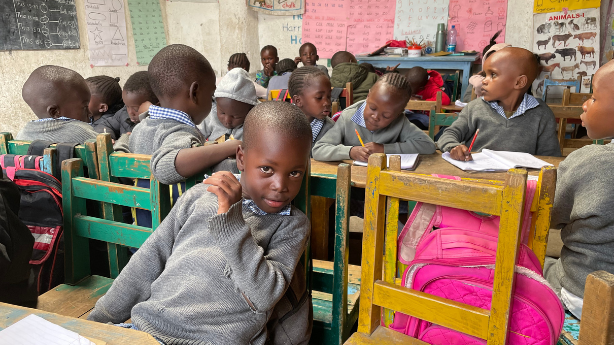
Imagine a child between 3–14 years old. One month they lose school to a strike, the next to elections, insecurity, or government closures. When schools reopen, there are no textbooks, no desks, no teachers, sometimes not even a dry classroom. Children sit on flooded floors. This is happening in a country where children are supposed to be protected and nurtured.
During the 2025 FCT strike, some schools lost over 50% of their students to low cost private schools, child labor and early marriage. And yet, when local elections occur, children are turned away from school, walking long distances in vain, while private schools continue uninterrupted. This is not their fault. They are victims of adult failures.
Children at this age are most vulnerable and keeping them out of school should not just be considered as negligence- it should be criminalized. No election, strike or political agenda should interfere with a child’s right to learn. Schools must be safe, uninterrupted spaces for children to grow and be protected from adult failures and systemic neglect.
We cannot continue to treat children like pawns. They are the pride and future of Nigeria. Our government must prioritize nursery and primary school children, provide safe, well-resourced learning spaces and insulate them from politics and corruption.
We must advocate for:
- Increased budgetary allocations to basic education
- Transparent use of funds to ensure classrooms, teachers and learning materials reach children
- Creative community solutions, like providing uniforms or textbooks in lieu of taxes, to bridge funding gaps
- Policies that shield children from strikes, elections, and insecurity, making schools safe spaces for learning
Nigeria’s children deserve more than rhetoric. They deserve action and protection. Every day we delay, we risk leaving millions behind, widening inequality and jeopardising the nation’s future.
As someone who has seen the difference small actions can make, I will continue to advocate tirelessly for these children.
